

There was a time when sitting through a full movie without checking your phone felt normal. Now, even during a short video, there’s this urge to pause, scroll, or switch. It’s subtle at first. Then it becomes your default. You’re not alone in this shift; almost everyone feels it in some way.
What’s changed isn’t just behavior. It’s how attention itself works. The way we interact with screens, apps, and constant notifications has quietly rewired how long we can stay focused, how deeply we think, and how easily we get distracted in everyday situations.
The Slow Shift: What Happened to Our Attention Span?

Attention didn’t just suddenly drop. It gradually adapted to how technology feeds us information.
Years ago, people spent a couple of minutes on a single screen. Today, that number has dropped to under a minute. That shift alone explains a lot. We’re consuming faster, switching faster, and expecting everything to keep up.
Technology has trained us to:
- Seek quick rewards
- Avoid anything that feels slow
- Constantly look for something new
That’s where attention span decline starts to show up not as a flaw, but as a learned response.
Why Your Brain Keeps Wanting to Switch

One of the biggest reasons behind reduced concentration is how digital platforms are designed.
Apps don’t just show content. They’re built to keep you engaged using something called variable rewards. It’s the same principle used in slot machines; you don’t know what’s coming next, so you keep checking.
Every scroll, notification, or refresh triggers a small dopamine response. Over time, your brain starts craving that loop.
This is often called the “popcorn brain” effect:
- Quick bursts of stimulation
- Constant novelty
- Low tolerance for stillness
So when you try to focus on something slower, like reading or deep work, it suddenly feels harder than it should.
The “Mere Presence” Problem No One Talks About
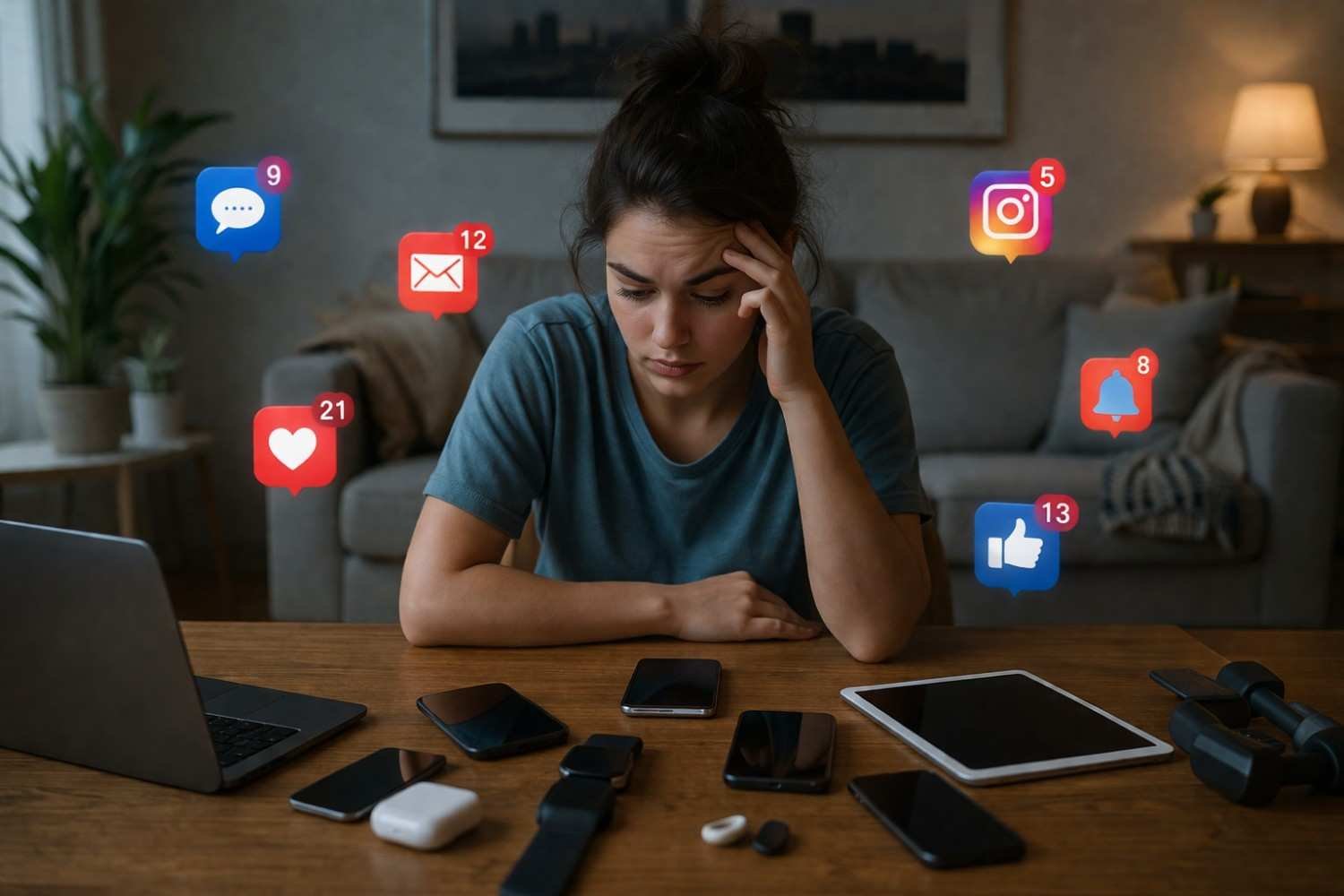
Here’s something most people overlook: your phone doesn’t even need to be in use to distract you.
Just having it nearby on your desk, in your pocket, or next to your laptop uses mental energy. Your brain is quietly working to ignore it, and that effort reduces your available focus.
This is known as the “mere presence” effect, and it explains why:
- You feel mentally drained even without heavy work
- You struggle to stay locked into a task
- Your focus feels fragmented
It’s not always about usage. Sometimes, it’s just about proximity.
Everyday Situations Where This Shows Up

You don’t notice attention changes in theory; you notice them in real life.
At work, it looks like switching between tabs every few minutes. You start a task, then check a message, then open another app. Each switch feels small, but together they create cognitive fatigue.
During conversations, you might find yourself half-listening while thinking about something else or worse, reaching for your phone without realizing it.
Even while relaxing, like watching a show, you might scroll at the same time. That’s digital multitasking, and it reduces how deeply you engage with anything.
Interestingly, when you start understanding how apps connect to servers, you begin to see why everything feels so instant and why your brain expects that same speed everywhere else.
The Hidden Cost of Multitasking

Multitasking feels productive, but it actually does the opposite.
Every time you switch between tasks, your brain has to reorient itself. This process, called switching cost, uses energy and reduces efficiency.
Over time, this leads to:
- Mental fatigue
- Lower productivity
- Reduced ability to focus deeply
Instead of doing multiple things well, you end up doing several things poorly.
How Different Age Groups Experience This

Technology doesn’t affect everyone the same way. The impact varies depending on how the brain develops and adapts.
Children, for example, are exposed to fast-paced digital content early. This encourages reactive thinking instead of sustained focus.
Teenagers are more sensitive to reward systems like likes, comments, and notifications. Their brains are still developing control systems, so distractions hit harder.
Adults deal with constant multitasking, especially in work environments filled with emails, chats, and apps.
Interestingly, older adults can actually benefit from certain types of technology. Brain-training tools and internet use may help maintain cognitive function when used intentionally.
Can You Actually Improve Your Attention Span?

Yes, but not by doing something extreme. The key is small, intentional changes that reduce overload.
Here are a few realistic ways to regain focus:
- Single-task more often
Train your brain to stay with one thing at a time, even if it feels uncomfortable at first - Keep your phone out of sight
Not just silent physically away from you - Create low-distraction zones
Certain times or spaces where notifications are completely off - Take short digital breaks
Step away from screens instead of switching between apps - Practice mental resets
Simple breathing or mindfulness exercises can help reduce overstimulation
These aren’t quick fixes. But over time, they rebuild your ability to focus.
FAQs: How Technology Affects Attention Span in Everyday Life
1. Why does technology reduce attention span?
Technology encourages constant switching, quick rewards, and high stimulation, which trains the brain to prefer short bursts of focus over sustained attention.
2. What is the “popcorn brain” effect?
It refers to a state where the brain craves constant stimulation, making it difficult to focus on slower or less engaging tasks.
3. Does multitasking really reduce productivity?
Yes. Frequent task switching increases mental fatigue and reduces overall efficiency due to cognitive reorientation.
4. Can attention span be improved after heavy screen use?
Yes. Practices like single-tasking, reducing distractions, and mindful breaks can gradually rebuild focus.
Final Thoughts
Technology hasn’t ruined attention span; it has reshaped it. The real issue isn’t that we’re losing focus, but that we’ve adapted to a faster, more fragmented way of processing information. That’s why deep thinking feels harder and quick content feels easier. It’s not a personal failure. It’s a behavioral shift driven by how we interact with digital systems every day.
The good news is that attention isn’t fixed. With a few intentional changes, you can train your brain to slow down again and focus better without disconnecting from technology completely.