
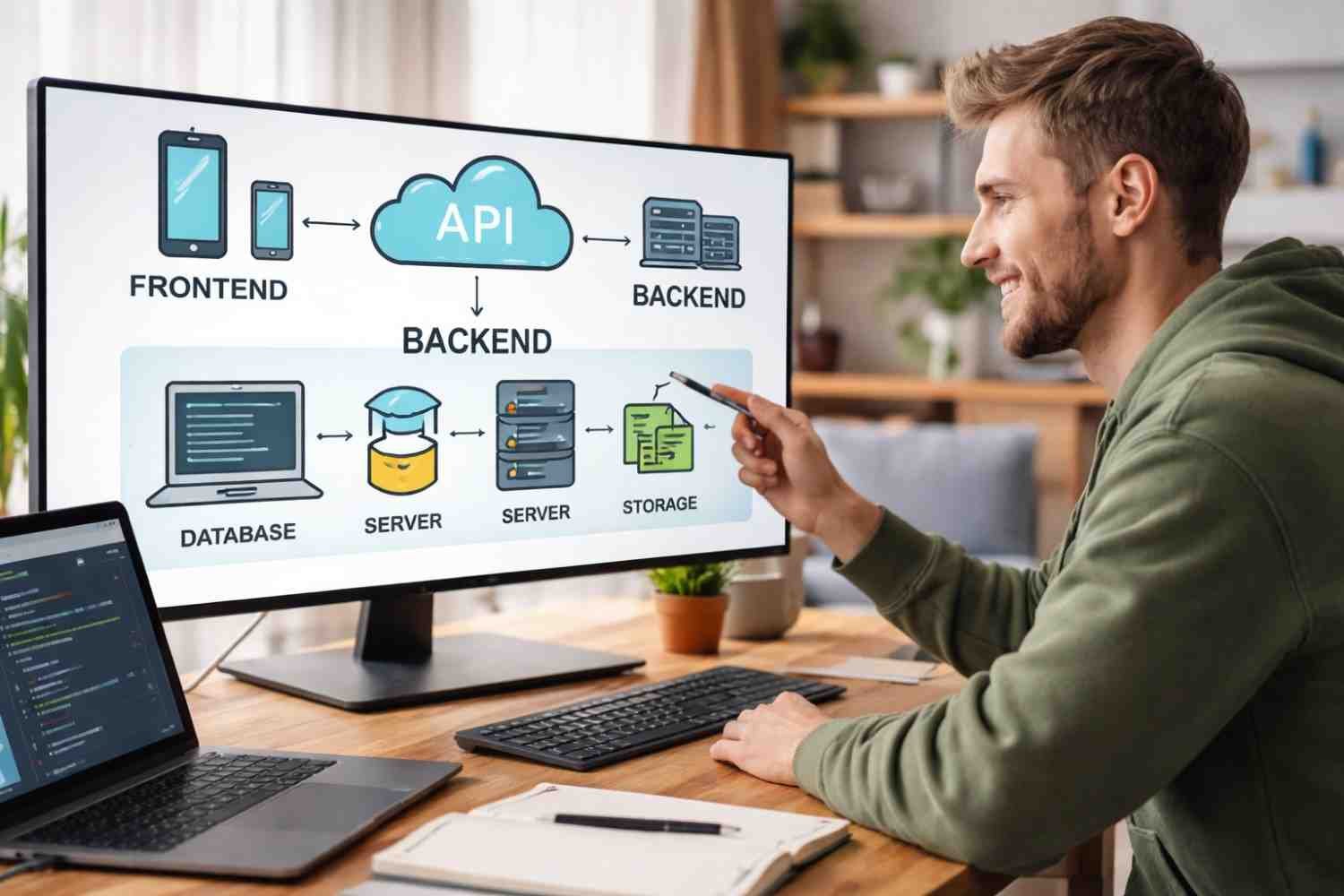
I still remember the first time I tried to understand how a login button actually works. You click it, and somehow your profile just appears. No delay, no visible process. It feels instant, almost like magic. But once you look behind that one click, there’s an entire system quietly working in the background.
The easiest way I’ve found to explain it is this: imagine using a food delivery app. You browse menus, tap buttons, and place orders; that’s what you see. But your order doesn’t magically prepare itself. There’s a hidden system doing the real work. That hidden system is what we call the backend.
What Backend Systems Really Mean

In simple terms, backend systems are everything that happens behind the scenes when you use an app or website. You don’t see it, but it’s doing all the heavy lifting, processing requests, storing data, and making sure everything works smoothly.
A simple analogy makes this clearer. Think of an app like a restaurant:
- The frontend is the dining area, which you interact with
- The backend is the kitchen where the real work happens
You don’t see the chefs, but without them, nothing gets served. That’s exactly how backend systems operate.
The Core Parts Of A Backend System

Every backend system, no matter how simple or advanced, usually revolves around three core components. Once you understand these, everything else starts to click.
Server: The Brain That Listens
The server is like the brain of the backend. It’s a computer (or a group of computers) that runs continuously and waits for requests. Every time you click a button, submit a form, or refresh a page, that request goes straight to the server.
It doesn’t just receive requests; it decides what to do next.
Database: The Memory That Stores Everything
The database is where all the information lives. Your username, password, order history, saved items, and everything are stored here.
Whenever you log in or fetch data, the server communicates with the database to either retrieve or update information. Without a database, apps wouldn’t “remember” anything.
Application Logic: The Rules That Control Everything
This is where the real decision-making happens. Application logic defines the rules of the system.
For example:
- If your password is incorrect → deny access
- If a product is out of stock → show unavailable
- If a payment is successful → confirm the order
It’s basically the set of instructions that tells the backend how to behave.
How Backend Systems Actually Work (Step By Step)
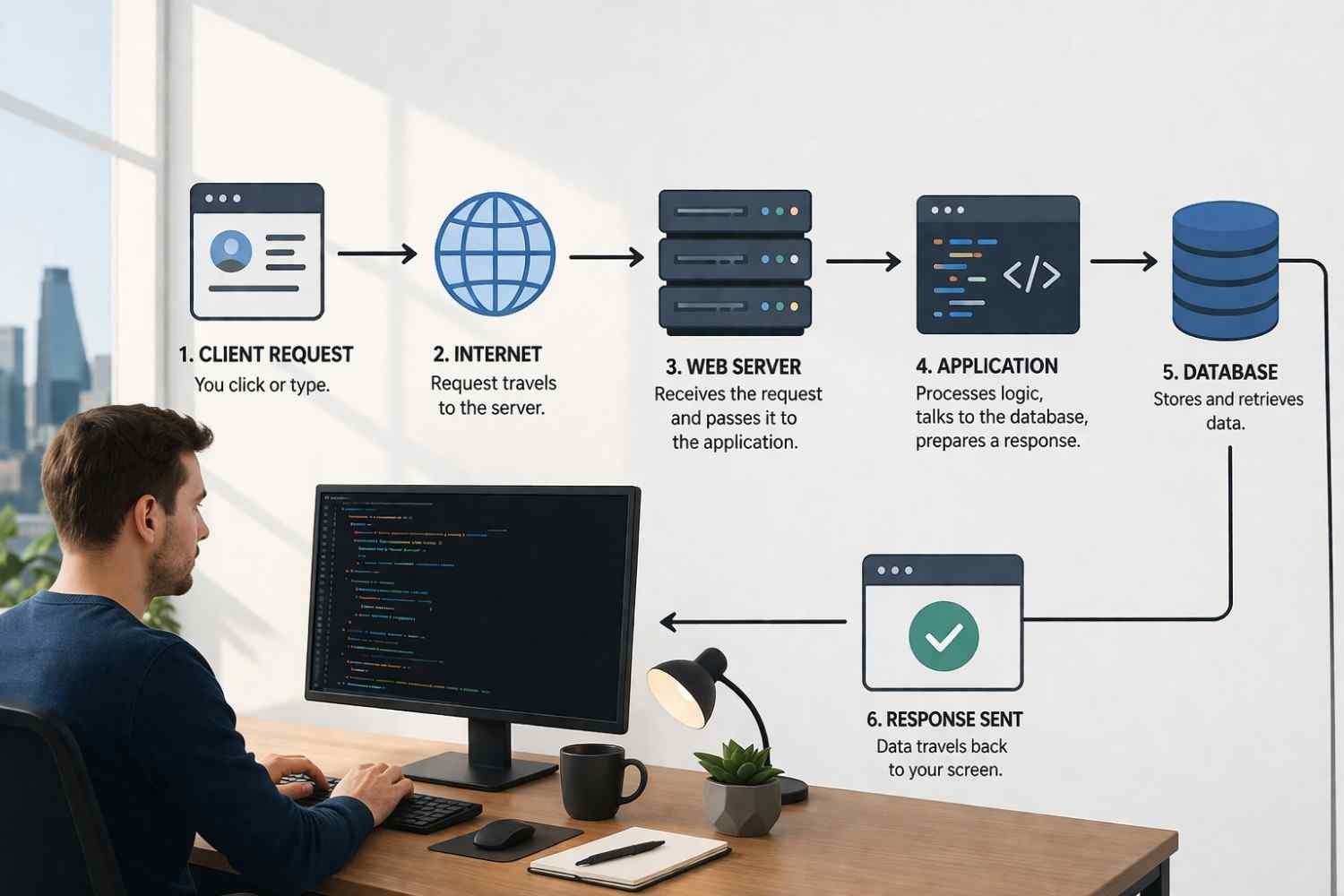
Let’s break down what really happens when you click something like a login button. It feels instant, but there’s a lot going on in milliseconds.
1. Request Is Sent
When you click “Login,” your app sends a request to the server over the internet. This is called an HTTP request.
2. Authentication Happens
The server checks your credentials by asking the database:
“Does this username and password match?”
If it doesn’t match, the process stops right there.
3. Processing The Request
If everything checks out, the server moves forward. It might fetch your profile data, notifications, or preferences.
4. Response Is Sent Back
The server sends the result back to your app. The frontend then updates your screen showing your dashboard, profile, or messages.
All of this happens so fast that it feels like a single action.
Why Backend Systems Matter More Than People Realize

Most people focus on design and user experience, but backend systems are what make everything reliable and functional.
Here’s what they actually handle:
- Security: Sensitive data like passwords and payment details are protected on secure servers
- Scalability: Whether it’s 10 users or a million, the backend manages the load
- Consistency: Your data stays synced across devices in real time
Without a strong backend, even the most beautiful app would fall apart quickly.
Backend Vs Frontend: A Quick Reality Check
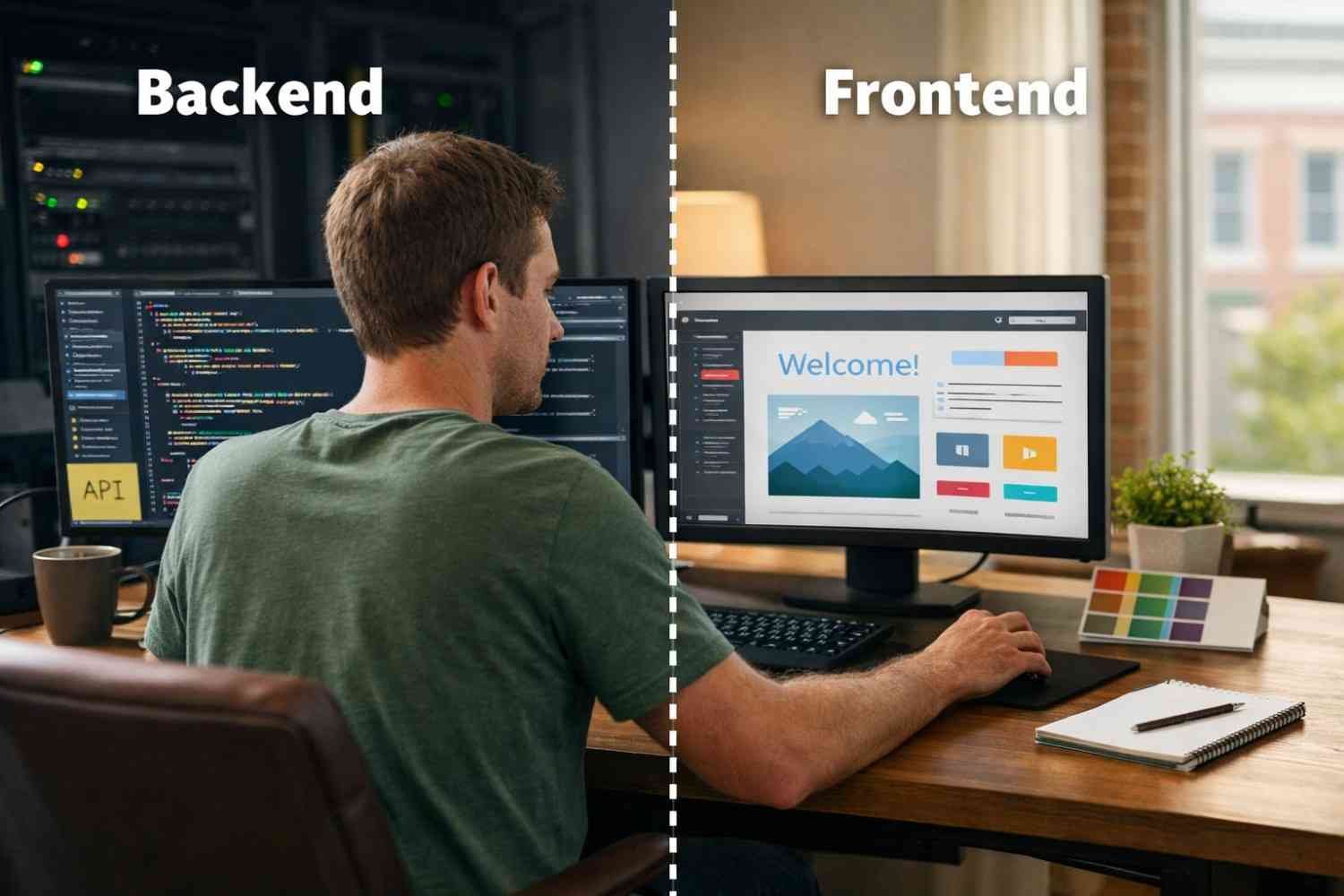
A lot of beginners get confused between frontend and backend. The difference is simple when you look at how you interact with technology daily.
Frontend is what you see: buttons, layouts, colours. The backend is what makes those buttons actually do something.
If you’ve ever explored topics like the evolution of wireless technology, you’ll notice a similar pattern that what users experience on the surface is only a fraction of the systems working underneath. Backend systems follow that same idea: invisible, but essential.
Common Technologies Used In Backend Systems

You don’t need to master these to understand backend basics, but it helps to know what powers these systems.
Programming Languages
These are used to write backend logic:
- Python
- JavaScript (Node.js)
- Java
- Ruby
Each has its own strengths, but they all serve the same purpose: handling requests and processing data.
APIs: The Invisible Messenger
APIs act like a waiter in a restaurant. They carry your request from the frontend to the backend and bring back the response.
You don’t see APIs, but every app relies on them constantly.
FAQs: Backend Systems In Simple Terms: How Apps And Websites Really Work
1. What Is A Backend System In Simple Terms?
A backend system is the part of an app or website that works behind the scenes to process data, handle requests, and manage everything you don’t see.
2. What Is The Difference Between Backend And Frontend?
Frontend is what users interact with visually, while backend handles the logic, data, and functionality that power those interactions.
3. Do I Need Coding Skills To Understand Backend Systems?
No. You can understand the basic concepts like servers, databases, and requests without writing code.
4. Why Are Backend Systems Important For Apps?
They ensure security, handle data, manage user activity, and keep everything running smoothly, even under heavy usage.
Final Thoughts
Once you understand backend systems in simple terms, technology starts to feel less mysterious. Every tap, swipe, or click becomes easier to interpret because you know there’s a structured process behind it. It’s not magic, it’s a well-coordinated system of servers, databases, and logic working together in real time. And honestly, once you see it that way, you start appreciating how much effort goes into even the smallest digital interaction.
At the end of the day, backend systems are the quiet force that keeps everything running. You may never see them, but you rely on them every single day.